The Outfit Nobody Actually Wore: What's Really Happening Behind Your Favorite Streetwear Content
Here's a scenario that's probably more familiar than most people admit: you spend forty-five minutes pulling a fit together, take thirty photos trying to get the right one, post the best shot with a filter that makes the colorway pop, and then change into sweats before you even leave your apartment. The fit got documented. It never really got worn.
This is the quiet contradiction living at the center of modern streetwear culture — and almost nobody talks about it directly.
The Documentation-First Mindset
Streetwear has always had a visual component. Zines, lookbooks, early streetwear blogs — the culture has been photographing itself since before most of its current participants were alive. But something shifted when smartphones put a camera in every pocket and Instagram created an architecture built entirely around the image.
The fit pic became its own genre. And like any genre, it developed conventions: the right angles, the right lighting, the right backdrops. Brick walls. Empty parking structures. Specific corners in specific cities that have appeared in so many posts they've become almost branded locations. The fit pic stopped being documentation and became performance.
That performance has consequences.
What's Actually Happening in Those Photos
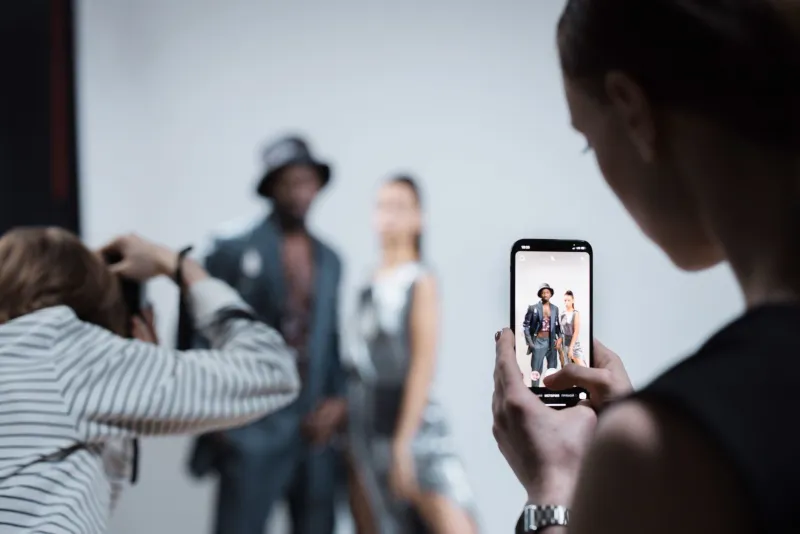
Anyone who's worked behind the lens of streetwear content knows the gap between what gets posted and what actually happened. Photographers who shoot for brands and individual creators will tell you the same thing: the process of getting one usable image often involves an hour of repositioning, multiple lighting adjustments, and a significant amount of post-processing.
Natural light is manipulated constantly. Shooting in the golden hour before sunset isn't just an aesthetic preference — it's a functional choice that makes colors richer, textures more defined, and skin tones more flattering than they'd appear in midday sun. The same jacket that looks muted and flat in overhead fluorescent light becomes a completely different garment in the right outdoor conditions.
Angles do the rest. A slightly elevated camera position lengthens proportions. Shooting into the sun creates a rim-light effect that separates the subject from the background and adds dimension. A piece that fits awkwardly when you're standing normally can be repositioned — weight shifted, arms adjusted, jacket collar popped — to read completely differently in a still image.
And then there's editing. Contrast adjustments that make fabric textures pop. Saturation tweaks that push colorways into more vivid territory. Spot corrections that remove the wrinkles that would have been ironed out if this were a professional shoot. By the time an image goes from shutter to post, it's been through a process that has almost nothing to do with how the clothes looked on a regular Tuesday.
The Purchasing Decisions This Creates
Here's where it gets genuinely complicated: people are making real financial decisions based on images that represent a best-case scenario that may not be reproducible in their own lives.
You see a hoodie in a fit pic and it looks incredible — the weight of the fabric is implied by the way it drapes, the colorway looks exactly right, the proportions seem perfect. You buy it. It arrives and looks fine. Not incredible — just fine. The gap between what you saw and what you got isn't a defect in the product. It's a defect in how the product was presented.
This cycle drives a significant amount of streetwear purchasing behavior. The dopamine hit of seeing something look extraordinary in content creates an expectation that the physical product almost can't meet. And when it doesn't, the response isn't usually to reassess the content — it's to buy the next thing that looks extraordinary in someone else's post.
Resale culture has made this even more intense. Pieces get photographed in ways that maximize their perceived value before a sale. A worn item shot in the right light with the right framing looks closer to retail condition than it actually is. Buyers receive something that technically matches the photos but doesn't match their mental image of what those photos implied.
The Pressure to Perform Taste
Beyond purchasing decisions, the fit pic culture creates a subtler kind of pressure: the sense that your actual daily wardrobe — the one you live in, commute in, spill coffee on — isn't worth anything because it doesn't photograph well.
The clothes people actually wear every day are rarely the ones they post. Comfortable, worn-in pieces that feel right don't always look right in a grid. A beloved hoodie that's been washed a hundred times has a softness and a fit that's personal and real and completely invisible in a photograph. The visual economy of streetwear content systematically devalues the most genuine parts of how people actually dress.
This creates a wardrobe split that a lot of people experience but rarely name: the clothes you wear for real, and the clothes you wear for the photo. Those two categories are increasingly different.
Recalibrating What the Content Is Actually For
None of this means fit pics are bad or that the people creating polished streetwear content are being dishonest in some malicious way. Creative presentation has always been part of fashion. The difference is that the scale and accessibility of that presentation has expanded to a point where the constructed image has become the default reference point — and the lived experience of wearing clothes has become secondary.
The most interesting shift happening right now in streetwear content is actually a move toward rawness. Unedited videos, phone dumps, behind-the-scenes shots that show the clutter and imperfection behind the polished image. Creators who show the B-roll — the rejected angles, the awkward transitions, the real-life context — are getting traction specifically because the audience is hungry for something that feels true.
That hunger is telling. It means people know, on some level, that what they've been looking at isn't the whole picture.
Wearing Clothes Like You Mean It
The best streetwear fits aren't the ones that look best in photos. They're the ones that feel right when you're actually moving through the world — walking to the train, standing in line, sitting across from someone at a table. The fit that works in those moments is the one worth building.
Post the photo if you want to. But don't let the photo become the point.
The clothes are for living in. That's still the whole idea.