When Your Fit Doesn't Feel Like You Anymore: Navigating the Identity Crisis That Nobody Talks About
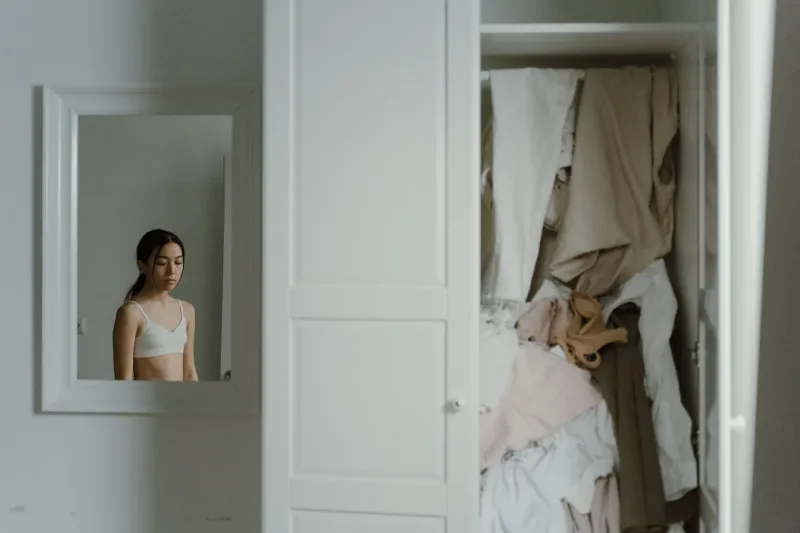
There's a specific kind of discomfort that comes when you open your closet, look at the pieces you've spent years and serious money building, and feel nothing. Or worse — feel like you're looking at someone else's wardrobe. Someone you used to be. Someone you're not sure you still want to be.
Streetswear culture doesn't really have language for this moment. We talk about leveling up. We talk about glow-ups. We celebrate the after and skip over the in-between. But the in-between is real, and it's a lot more complicated than anyone admits.
The Weight of a Signature Look
In streetwear, your aesthetic is never just clothes. It's communication. It's how you signal which communities you belong to, which references you're drawing from, which version of the culture you're claiming. When you're known for a specific look — heavy oversized fits, monochrome minimalism, vintage sports gear, whatever it is — that look becomes part of how people understand you.
And that's where it gets heavy. Because once people know you for something, changing it isn't just a wardrobe decision. It feels like a statement. It invites questions. It opens you up to the kind of commentary that streetwear communities are not always gentle about delivering.
"He sold out." "She doesn't know what she's doing anymore." "That's not him." The social cost of aesthetic evolution is real, and the fear of it keeps a lot of people stuck in a look they've genuinely outgrown.
You're Not the First Person This Has Happened To
Some of the most respected figures in streetwear and adjacent culture have navigated this exact transition publicly, which makes their trajectories worth studying.
Pharrell Williams built an entire era of his public image around specific silhouettes — the trucker hats, the Bape collabs, the maximalist early-2000s energy — and then quietly, over several years, shifted toward something more refined and tailored. He didn't announce the pivot. He didn't explain it. He just started showing up differently, and eventually the culture caught up to him.
Kanye West's style evolution has been more turbulent and more public, but the underlying pattern is the same: a person whose aesthetic was central to their identity going through multiple visible reinventions, each one met with some version of backlash, each one eventually absorbed into a larger understanding of who they are.
What both examples have in common is that the evolution was genuine. It wasn't calculated rebranding. It was an actual person changing, and their clothes changing with them. That authenticity — even when it confused people — is ultimately what kept their credibility intact.
What's Actually Happening When Your Style Stops Fitting
Style evolution isn't random. It tends to track with real changes happening underneath the surface — shifts in your values, your environment, your sense of self, your relationship to the communities you used to identify with most strongly.
Sometimes it's age. Not in the "you're too old for that" sense — that's a lazy read — but in the sense that your priorities genuinely change as you move through your twenties and thirties. The things you wanted your clothes to communicate at 19 might not be the things you want them to communicate at 27.
Sometimes it's geography. Moving from one city to another, or even from one neighborhood to another, changes the visual context you're operating in. A fit that read perfectly in one environment can feel completely off in a new one.
Sometimes it's just saturation. You wore the same aesthetic for so long, so consistently, that it stopped feeling like a choice and started feeling like a uniform. And the moment something feels mandatory is the moment it loses whatever made it interesting.
The Grief Part Is Real
Here's what nobody tells you: there's actual grief involved in leaving a signature style behind. Not dramatic, life-altering grief, but a real sense of loss — for the clarity you had, for the community that recognized you, for the version of yourself that knew exactly what they were doing every time they got dressed.
That grief is worth acknowledging rather than rushing past. The aesthetic you're leaving behind wasn't nothing. It served you. It expressed something true about who you were at a specific moment. Honoring that before moving forward isn't weakness — it's how you make sure the evolution is real rather than just reactive.
Moving Forward Without Burning It Down
The instinct when you're bored or uncomfortable with your current look is to purge everything and start over. Resist that. Wholesale reinvention usually produces something that feels just as forced as the aesthetic you were trying to escape, because you're building from anxiety rather than clarity.
Instead, try subtraction before addition. Pull back on the most extreme or signature elements of your current look and see what's underneath. Often there are pieces and preferences that have been part of your rotation for years that aren't tied to the specific aesthetic you're outgrowing — they're just yours. Those are the foundation of whatever comes next.
Give yourself permission to be in transition visibly. You don't have to have the next look figured out before you start letting go of the last one. Some of the most interesting style moments happen in the in-between, when you're wearing things in combinations that don't quite resolve yet.
And be honest with yourself about which elements of your old aesthetic you're holding onto because you actually love them versus which ones you're holding onto because you're afraid of what people will say if you let them go. Fear is a terrible wardrobe consultant.
The Community Will Catch Up
If you're known in a community for a specific look, some people will be confused when you change. Some will be critical. Some will say you've lost the plot. This is going to happen regardless of what you do, so it's worth deciding in advance that it's not going to stop you.
The people who matter — the ones whose opinions are actually worth weighing — tend to respect genuine evolution even when they don't immediately understand it. What they don't respect is stagnation performed as loyalty, or change performed as trend-chasing.
Change because it's true. Change because the old fit doesn't fit anymore — not just on your body, but in your life. That's not a betrayal of where you came from. It's proof that where you came from actually meant something.
You're not the same person you were when you put that first look together. Your clothes should probably reflect that.