Worn In, Not Worn Out: The Art and Science of Making Your Streetwear Look Like It's Been Places
There's a guy at every sneaker convention, every block party, every pop-up who walks in wearing something that stops conversations. Not because it's new. Not because it's rare. Because it looks lived in. The denim is creased in all the right places. The canvas bag has that soft, chalky fade that only comes from real use. The hoodie fits like it was made for his exact body, because after two years of daily wear, it basically was.
That's the fade game. And once you understand it, you'll never look at a fresh-from-the-shelf piece the same way again.
Why Aged Streetwear Hits Harder Than Fresh Drops
Streetswear culture has always had a complicated relationship with newness. On one hand, the whole drop model is built around the thrill of something fresh. On the other hand, the pieces that actually earn respect — the ones that end up on archive accounts and resale listings with four-figure price tags — are almost never the ones that still have the tags on.
There's a psychological reason for that. When you see a piece that's been properly broken in, your brain starts filling in the blanks. Where has this been? Who wore it? What did they do in it? Aged clothing carries implied narrative, and in a culture that's obsessed with authenticity, narrative is currency.
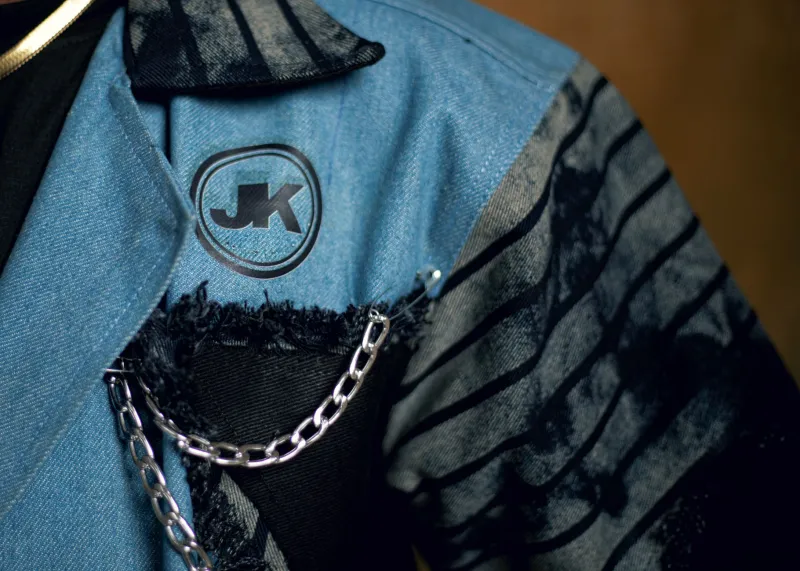
Resale markets reflect this clearly. A pair of vintage Carhartt work pants with natural fading and genuine wear patterns will move faster — and often for more money — than the same style bought new. Same goes for broken-in canvas sneakers, sun-bleached graphic tees, and denim jackets with cracked paint on the back. The market isn't just tolerating the wear; it's actively seeking it out.
The Difference Between Fake Distress and Real Patina
Here's where it gets nuanced. There's a massive difference between factory distressing — those pre-ripped jeans from a fast-fashion retailer that look beat up before you've ever touched them — and genuine patina that develops through actual use.
Factory distressing is uniform. It's symmetrical. It shows up in places that don't make physical sense for how a body actually moves. Real wear, on the other hand, is personal. It forms along your specific crease lines, in the spots where your wallet sits, where your keys rub against the fabric, where your knees bend thousands of times a week.
The goal isn't to fake it. The goal is to accelerate what's already going to happen naturally — and to do it intentionally enough that the result looks genuine, because it is.
Techniques That Actually Work
For denim, the most effective method is also the most obvious: wear it constantly and wash it as little as possible. Raw denim enthusiasts have been preaching this for decades, and the science backs them up. The indigo dye in quality denim is designed to fade with friction, and the friction points on your specific body create a fade map that's completely unique to you. Wear your jeans for six months before washing them and you'll have a pair that no factory can replicate.
If you want to speed that process up, targeted sandpaper work on high-contact zones — the thighs, the back pockets, the hem — can simulate months of wear in a few hours. Use fine-grit paper and work with the grain of the fabric rather than against it. The result should look like gradual erosion, not like someone attacked it.
For canvas, sun exposure is your best friend. Canvas bags, sneakers, and jackets fade beautifully in direct sunlight, especially if you dampen the fabric slightly first. Leave pieces out for several hours over a few days and you'll get that desaturated, slightly chalky look that vintage heads pay serious money for.
For graphic tees, repeated high-temperature washing followed by line drying is the move. The heat breaks down the plastisol ink in screen-printed graphics, creating that cracked, distressed look that makes a tee feel like it's been through something. Turning the shirt inside out before washing protects the graphic from over-cracking while still allowing the overall fabric to soften and fade.
The Mental Side of the Fade Game
Beyond technique, there's a mindset shift that has to happen. Most of us are conditioned to protect our gear — to keep it clean, to store it carefully, to treat wear as damage. The fade game asks you to flip that entirely.
Wearing your favorite piece hard isn't disrespecting it. It's completing it. A jacket that's been through three winters, two road trips, and a dozen concerts is a different object than the one that came off the rack. It's yours in a way that no purchase receipt can confirm.
This is actually why the most respected figures in streetwear culture tend to wear the same pieces constantly rather than cycling through new drops every week. The repetition is the point. The accumulation of wear is the flex.
What This Means for How You Shop
If you buy into the fade game philosophy — and we think you should — it changes how you approach buying new pieces. Instead of asking "how does this look right now," you start asking "how is this going to look in two years?"
Heavyweight fabrics fade better than lightweight ones. Natural fibers develop patina more interestingly than synthetics. Pieces with strong construction survive the aging process without falling apart. In other words, quality matters — not because you want it to stay pristine, but because you want it to age with integrity.
The best streetwear pieces aren't the ones that look perfect on day one. They're the ones that look better on day five hundred. Start thinking that way, and your whole approach to building a wardrobe changes.
The fade game is patient. It rewards consistency. And it produces something no drop can give you — a piece that's completely, irreversibly, yours.