What You See Is Not What You Get: The Truth Behind Streetwear's Lookbook Lies
You've been there. You screenshot a fit from a brand's drop campaign, screenshot it again for reference, maybe even send it to the group chat with a fire emoji. You cop the piece. It arrives. You throw it on, check the mirror, and something just isn't adding up. The proportions feel off. The color looks different. The drape isn't doing what it was doing on the model. You didn't get scammed — but you kind of feel like you did.
Welcome to the lookbook paradox. It's one of streetwear's worst-kept secrets, and the gap between a brand's campaign visuals and real-world wear is wider than most people want to admit.
The Studio Is Lying to You (And It Knows It)
Every professional lookbook shoot is a controlled environment built to make fabric look like a dream. Studio lighting is calibrated to eliminate shadows that might reveal how a tee bunches at the waist or how a pair of cargos sags in the wrong places. Photographers use wide-angle and telephoto lenses interchangeably to stretch or compress a silhouette depending on what flatters the garment. A hoodie that photographs as perfectly boxy might be stiff as cardboard in real life. A washed-out colorway that looks vintage and lived-in under warm tungsten lighting might read as straight-up faded under fluorescent bulbs at the mall.
Styleists have a whole toolkit for this. Clips and pins are used on the back of garments to create a cleaner front-facing silhouette. Sizing is often mismatched intentionally — a model might be wearing a medium on top and a large on bottom to achieve a specific proportion that wouldn't exist if they wore the actual size the brand recommends. Some shoots use light ironing or steaming on pieces that aren't supposed to be ironed at all, just to kill wrinkles for the camera.
None of this is unique to streetwear. High fashion has been doing it for decades. But streetwear built its reputation on authenticity — on being the antidote to fashion's fakeness — so when the illusion hits different in this space, it stings harder.
The Body Diversity Problem Nobody Wants to Talk About
Lookbook models are almost universally selected because they photograph well, which in the fashion industry has historically meant a very narrow physical range. Streetwear has made real progress on this front compared to luxury fashion, but the baseline is still skewed. When a brand shoots a single model in a single size, they're showing you one possible version of that garment. If your body carries weight differently, if you're shorter or taller, if your shoulders sit broader or narrower — the fit you see in the campaign is essentially a different product than the one that will land on your frame.
The community has started pushing back hard. Fit check threads on Reddit and Discord servers dedicated to specific brands regularly feature real people posting real-world fits alongside the original campaign images. The contrast is sometimes dramatic. A jacket that looked slim and structured in the lookbook reads oversized and shapeless on someone with a shorter torso. A pair of pants that seemed tapered and clean on a six-foot model pools at the ankles on someone five-eight.
These threads aren't dragging brands — they're filling a gap the brands themselves leave open. Real people sharing real fits have become the most reliable source of buying information in streetwear, and that shift says everything about how much trust the lookbook format has burned through.
Angles, Atmosphere, and the Illusion of Context
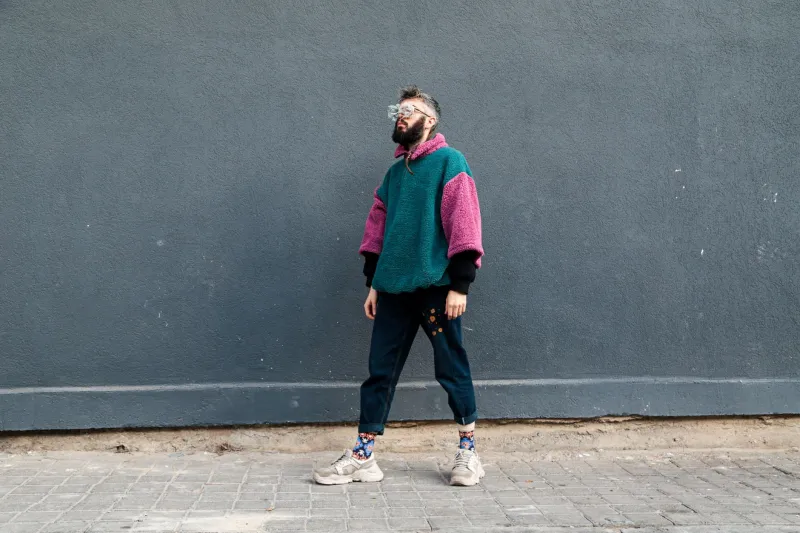
Location scouting plays a bigger role than most people realize. A piece photographed against cracked concrete in an industrial setting reads completely differently than the same piece shot in a clean white studio. Brands know this. The environment a garment is photographed in creates emotional associations that influence how you perceive the clothing itself. That beat-up alleyway backdrop makes the hoodie feel like it belongs to someone who lives the culture. The vibe becomes part of the product in your mind.
Angles do the same work. Low-angle shots make silhouettes look taller and more imposing. High-angle shots can shrink a piece and make it look cropped. Shooting from slightly to the side can create the illusion of a taper that doesn't exist in the actual cut. By the time you've absorbed a lookbook, you've been walked through a carefully choreographed visual argument for why this piece is perfect. None of the counterarguments — the awkward fit at the armhole, the way the hem sits weird when you sit down — make the cut.
Building a Fit Philosophy That Works in the Real World
The move isn't to stop trusting your eyes entirely — it's to train them better. A few habits that serious buyers have developed:
Seek out community-sourced fits first. Before you buy anything, search the brand name plus the item name across Reddit, TikTok, and YouTube. Real people posting real fits in real light are worth ten professional campaign photos. Pay attention to people who share your body type and notice how the piece lands on them.
Read the measurements, not just the size chart. Size charts are helpful but vague. A lot of brands now post actual garment measurements — chest width, body length, sleeve length. Pull out a tape measure and compare those numbers to something you already own and love. That's the most accurate preview you'll get.
Understand your own fit preferences. Do you like things boxy? Do you prefer a slight taper? Do you run long in the torso? Knowing your preferences means you can look at a campaign image and mentally translate it — this piece is going to read differently on me, and here's roughly how.
Factor in the fabric. Stiff fabrics photograph beautifully and wear awkwardly. Soft fabrics drape in ways that don't always read on camera. If a brand describes a material as heavyweight structured cotton, expect it to look sharper in photos than it will feel in motion.
Give yourself permission to return. This sounds obvious but a lot of people talk themselves out of returning pieces because they feel like the fit is their fault. It's not. The gap between campaign imagery and real-world fit is a structural problem in how clothing is marketed, not a personal failure.
The Brands Getting It Right
A handful of brands have started closing the gap on their own. More inclusive casting, unretouched photography, and multiple fit models across different body types are becoming part of the conversation. Some brands have leaned into raw, less-produced content — phone camera shots, natural light, real settings — as a deliberate choice to build trust. It's not universal, but the direction is right.
The pressure driving that change is coming directly from the community. When buyers can post side-by-side comparisons of the lookbook versus the real thing and rack up thousands of views, brands have a choice: get honest or get called out.
Streetwise consumers are the best quality control the culture has. The lookbook will always be a sales tool. Your job is to look past it.